How to Choose the Right Windowsill for Plastic Windows
A windowsill is not just a decorative window element. It performs important functions: protects the wall from moisture, creates an additional work surface, and completes the overall look of the window opening. In this article, we’ll examine how to properly choose a windowsill for plastic windows, what materials exist, and what to look for when buying. Specifically, we’ll examine issues relevant to Kyiv residents, where windowsill installation is a sought-after service.
Why You Need a Windowsill
A windowsill performs several key functions:
- Wall protection. Prevents moisture and condensation from penetrating the wall structure, which is especially important for apartments with increased humidity.
- Aesthetic function. Completes the overall look of the window, hiding the frame-wall junction.
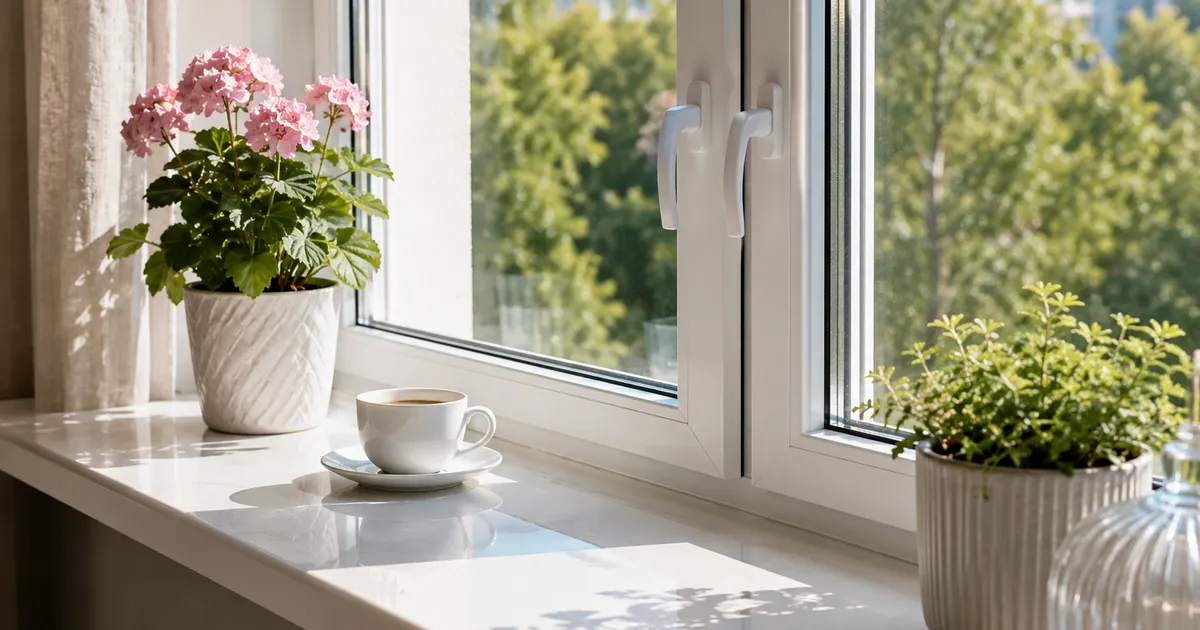
- Additional surface. Creates space for flowers, decor, or a work area.
- Thermal insulation. Helps reduce heat loss through the window opening.
Expert Tip: If the windowsill is installed incorrectly, gaps may form through which warm air will escape outside. Therefore, it’s worth trusting installation to professionals.
Types of Windowsills by Material
The market offers several types of windowsills, each with its own advantages and disadvantages.
PVC (Plastic) Windowsills
The most popular option due to affordable price and simple installation. PVC windowsills are lightweight, moisture-resistant, and don’t require special care. They perfectly match plastic windows in color and texture.
Advantages:
- Low price
- Lightweight
- Simple installation
- Moisture resistance
Disadvantages:
- May yellow from direct sunlight
- Less resistant to mechanical damage
- Limited color selection
Stone Windowsills
Made from natural or stone. Differ in high strength, durability, and premium appearance. Perfectly suited for kitchens and bathrooms.
Advantages:
- High strength and wear resistance
- Moisture and temperature resistance
- Luxurious appearance
- Durability (over 50 years)
Disadvantages:
- High price
- Heavy weight
- Complex installation
Wooden Windowsills
A classic option that looks great in country or eco-style interiors. Wood is natural, pleasant to touch, and creates a cozy atmosphere.
Advantages:
- Natural material
- Pleasant texture
- Eco-friendliness
Disadvantages:
- Require regular treatment
- Moisture-resistant only with proper treatment
- May deform from temperature changes
Acrylic Windowsills
A modern material that combines the advantages of PVC and stone. Acrylic windowsills have a smooth, non-porous surface that’s easy to clean and doesn’t absorb dirt.
Advantages:
- Lightweight and strength
- Stain resistance
- Color variety
- Scratch repair possibility
How to Choose Windowsill Size
The right windowsill size is the key to quality installation and aesthetic window appearance.
Width
Standard windowsill width for living rooms is 20-25 cm. For kitchens and bathrooms, you can choose narrower options (15-20 cm), as there’s usually less free space there.
Important: Windowsill width shouldn’t cover the heating radiator by more than 1/3, otherwise heat won’t circulate normally around the room.
Length
Windowsill length is determined by the window opening width. The windowsill should be 3-5 cm wider than the opening on each side to fit tightly against the wall and cover the junction.
Thickness
Standard windowsill thickness is 20-40 mm. Thickness depends on material and load. For stone windowsills, a thickness of at least 30 mm is recommended.
Expert Tip: Always measure the window opening before buying. Consider the slope depth and distance to the radiator. Our UWS specialists will help take accurate measurements for free.
In Kyiv, particularly in Obolon, Pechersk, and Darnytskyi districts, residents often need professional windowsill installation, as proper installation guarantees airtightness and durability of the structure.
Installation and Care Tips
Installation
Proper windowsill installation includes several stages:
- Surface preparation. Cleaning and leveling the installation location.
- Blank cutting. The windowsill is cut considering slopes and angles.
- Installation on substrates. The windowsill is fixed using special substrates or brackets.
- Foaming. Cavities under the windowsill are filled with mounting foam for thermal and sound insulation.
- Final finishing. Sealing seams and installing decorative caps.
Care
- For PVC and acrylic windowsills, use mild detergents without abrasive particles.
- Stone windowsills can be washed with regular detergents, but avoid acidic compounds.
- Wooden windowsills require regular application of protective coating (linseed oil or varnish).
- Avoid placing hot objects without stands, especially on PVC surfaces.
Common Mistakes
- Incorrect measurement. Leads to gaps and need for additional processing.
- No insulation. Cavity under windowsill without foam becomes a cold bridge.
- Radiator blocking. Hinders normal warm air circulation.
- Using low-quality materials. Leads to deformation and loss of appearance.
A properly chosen and installed windowsill will serve you for decades and become a beautiful addition to the window. If you have doubts about your choice — contact UWS specialists who will help select the optimal option specifically for your room. UWS performs windowsill installation in Kyiv and Kyiv region with warranty on all work. UWS specialists also provide window repair and glass unit installation services.