How to Prevent Window Condensation: A Complete Guide
Introduction
Condensation on windows is a common problem faced by many plastic window owners, especially in Kyiv during winter. Water droplets on the glass, wet window slopes, and mold growth — these are not just aesthetic issues but also threats to health and structural integrity.
In this article, we’ll examine the causes of condensation and effective methods to prevent it.
Why Does Condensation Appear?
Condensation occurs due to a physical process: moist air, when in contact with a cold surface, cools and loses its ability to retain moisture. As a result, water is released in the form of droplets.
Main Causes:
1. High Indoor Humidity
This is the primary cause. Normal indoor humidity is 40-60%. Above 60%, the risk of condensation increases significantly.
Sources of excess moisture:
- Cooking without an exhaust hood
- Drying laundry indoors
- Large number of houseplants
- Aquariums
- Respiratory illnesses of residents
- Insufficient ventilation
2. Temperature Difference
The greater the temperature difference between outside and inside, the higher the condensation risk. This is especially true in winter when temperatures drop below -10°C.
3. Thermal Bridges
Thermal bridges are areas of the structure where heat actively escapes. Most commonly:
- The junction between the glass unit and frame
- Metal structural elements
- Areas where the frame contacts the wall
4. Improper Installation
If a window is installed with technology violations (insufficient insulation, no waterproofing), it can lead to condensation.
5. Blocked Ventilation
Plastic windows are airtight, and if the building’s ventilation system doesn’t work properly, moisture isn’t expelled outside.
Methods to Prevent Condensation
1. Regular Ventilation
The simplest and most effective method is regular room ventilation.
Recommended ventilation schedule:
- Frequency: 3-4 times per day
- Duration: 10-15 minutes
- Method: casement or tilt-and-turn opening
Tip: Ventilation is more effective when creating a cross draft (opening casements on opposite sides of the room). This ensures quick air exchange.
Types of ventilation:
- Short (intensive): 5-10 minutes with fully open casements. Effectively removes excess moisture.
- Extended (gentle): 1-2 hours with slightly open casements. Suitable for continuous ventilation.
- Night: leave a casement slightly open overnight (if there are no drafts or cold).
2. Humidity Control
Measuring humidity
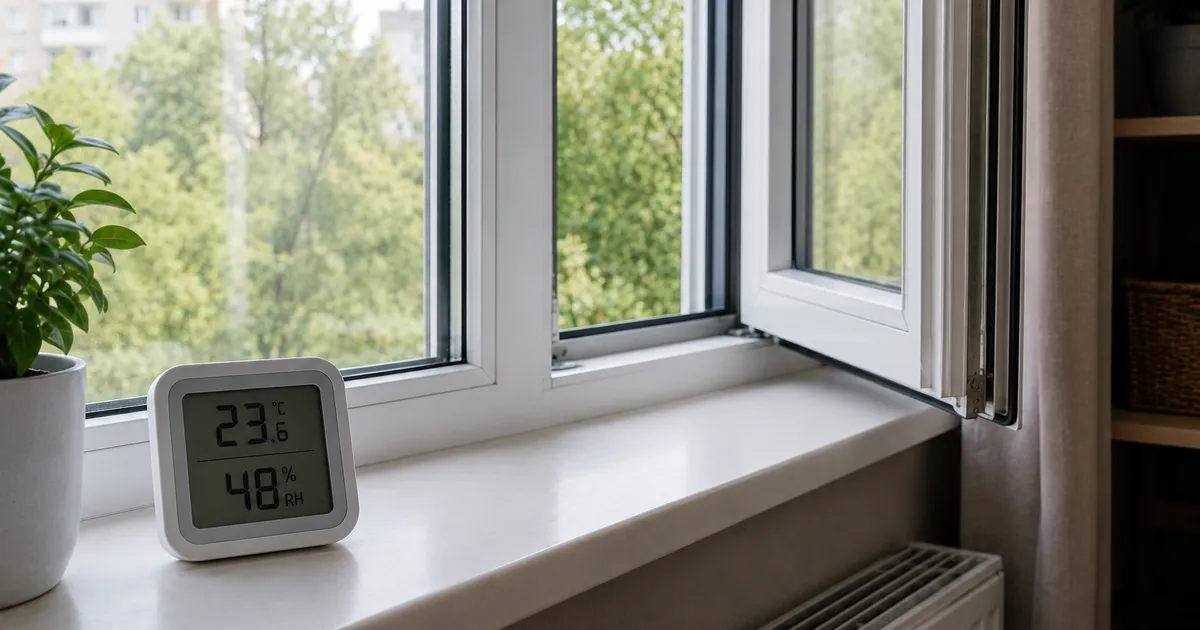
Buy a hygrometer (humidity meter). This is an inexpensive device (from 200 UAH) that helps monitor humidity levels.
Optimal readings:
- Bedroom: 40-50%
- Living room: 40-60%
- Kitchen: 40-60% (can rise to 70% during cooking)
- Bathroom: 50-70%
Ways to reduce humidity:
- Kitchen exhaust hood: use the hood every time you cook.
- Bathroom exhaust: turn on before showering and leave running for 15-20 minutes after.
- Don’t dry laundry in the room: use the balcony, bathroom, or a dedicated dryer.
- Limit the number of plants: a large number of houseplants increases humidity.
- Cover pot lids: use lids during cooking to reduce moisture in the air.
3. Room Heating
Even heating helps maintain glass temperature above the dew point.
Tips:
- Don’t block radiators: don’t place furniture or curtains in front of radiators. Heat should circulate freely.
- Use thermal curtains: if the window is far from the radiator, install a convector or thermal curtain.
- Maintain temperature: minimum room temperature is 18-20°C. Lower temperatures increase condensation risk.
4. Using Micro-Ventilation
Most modern plastic windows have a micro-ventilation (micro-airing) function. This is a small gap that ensures constant air circulation.
How to use:
- Set the handle to the micro-ventilation position (usually a 45° turn)
- Leave the window in this position overnight
- Ensure access to outside air
Important: Micro-ventilation doesn’t replace full ventilation but helps maintain normal humidity throughout the day.
5. Ventilation Valves
If regular ventilation isn’t possible or convenient, install ventilation valves.
Types of valves:
- Wall-mounted: installed in the wall, providing constant fresh air supply.
- Window-mounted: installed directly in the window, no renovation needed.
- Supply valves: provide outside air with adjustable flow.
Benefits of ventilation valves:
- Constant air circulation without drafts
- Automatic air supply adjustment
- Heat retention (valves have filters and controls)
- Reduced outside noise
Additional Measures
1. Slope Insulation
Uninsulated slopes are the main thermal bridge. If slopes aren’t insulated, cold penetrates through the wall and cools the window frame.
Insulation options:
- Mineral wool + plaster
- Foam board + plaster
- Thermal plaster
- PVC panels with insulation
2. Glass Unit Replacement
If your windows have a single-chamber glass unit without energy-saving coating, this could be the cause of condensation. Replacing it with a double-chamber unit with a low-emissivity coating significantly reduces the risk. UWS performs glass unit replacement in Kyiv with a warranty on all work.
3. Hardware Adjustment
Check whether the sash presses tightly against the frame. Insufficient pressure allows cold air inside and cools the glass.
4. Using Films
Special energy-saving films can be applied to the glass unit. They reflect heat back into the room and raise the glass temperature.
What Doesn’t Help with Condensation?
Some “folk” methods are ineffective or even harmful:
- Salt or chalk: don’t help, just create a mess.
- Newspapers on the windowsill: don’t solve the problem, just mask the consequences.
- Opening windows overnight without control: can lead to overcooling and drafts.
- Using heaters near windows: effective but energy-intensive and potentially dangerous.
When Is Window Replacement Needed?
In some cases, condensation indicates serious problems that can’t be solved by preventive measures:
- Single-chamber glass unit without energy-saving — replace with a double-chamber energy-saving unit.
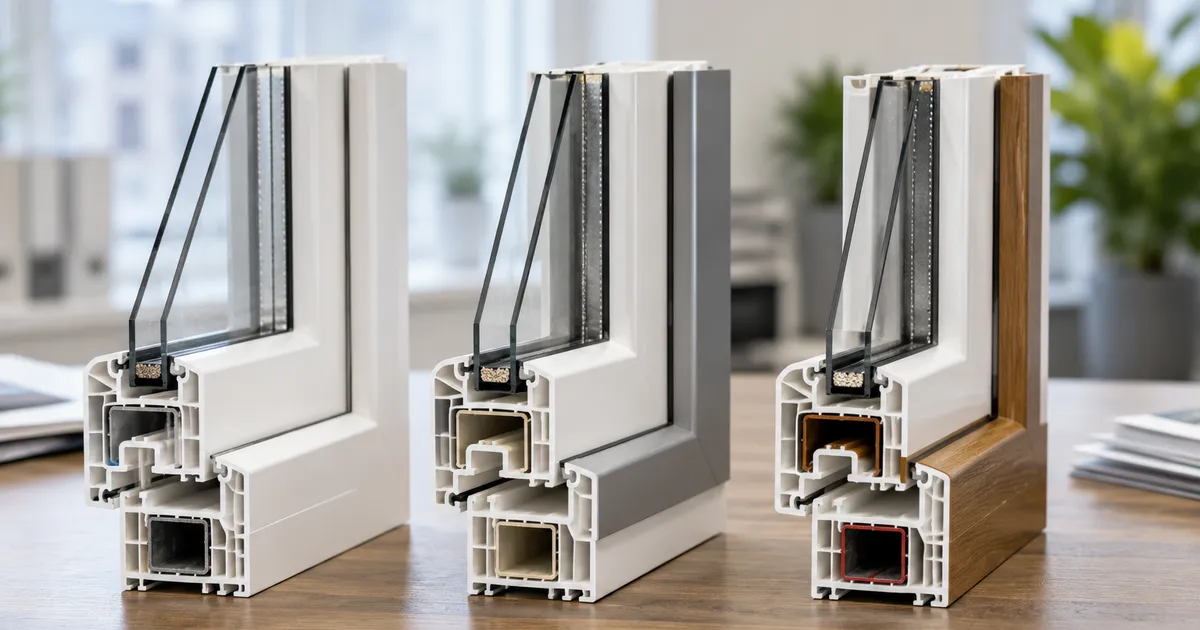
- Class B profile (wall thickness 2.5 mm) — replace with Class A profile (3 mm).
- Improper installation — reinstallation with slope insulation.
- Very old windows (over 15-20 years) — replace with modern energy-efficient windows.
Conclusion
Condensation on windows isn’t a death sentence. In most cases, the problem can be solved without window replacement through:
- Regular ventilation (3-4 times per day for 10-15 minutes)
- Humidity control (40-60%)
- Proper heating (don’t block radiators)
- Using micro-ventilation or ventilation valves
- Slope insulation
If these measures don’t help, contact specialists for diagnostics. UWS will help identify the cause of condensation and offer an effective solution — from hardware adjustment to glass unit or window replacement in Kyiv. Our professionals also perform window installation and mosquito net installation.