How to Choose a Quality Glass Unit: What to Look For
Glass Unit Types and Their Features
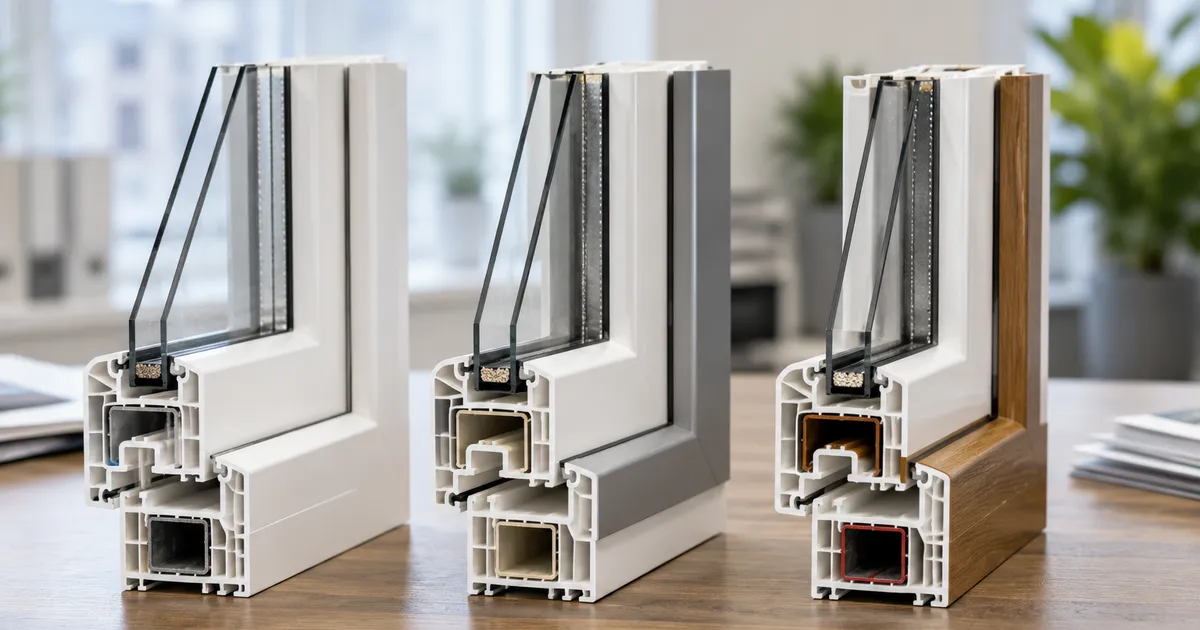
A glass unit is a construction of two or more glass panes connected by a spacer frame and filled with air or gas. Choosing the right glass unit is key to comfort and energy savings, especially in Kyiv’s climate.
Single-chamber glass unit:
- Consists of two glass panes
- Thickness: 4-6 mm glass + 12-16 mm air gap
- Thermal conductivity: 2.8 W/(m-K)
- Used for unheated spaces or storefronts
Double-chamber glass unit:
- Consists of three glass panes
- Thickness: 4 mm glass + 12 mm air + 4 mm glass + 12 mm air + 4 mm glass
- Thermal conductivity: 1.4 W/(m-K)
- Most popular option for residential spaces
Triple-chamber glass unit:
- Consists of four glass panes
- Thickness: 4 mm glass + 12 mm air + 4 mm glass + 12 mm air + 4 mm glass + 12 mm air + 4 mm glass
- Thermal conductivity: 0.8 W/(m-K)
- Maximum thermal and sound insulation
Tip: For most apartments, a double-chamber glass unit with energy-saving coating is optimal — it provides good thermal insulation at a reasonable price.
Energy-Saving Technologies
Modern glass units can have special coatings that significantly improve their thermal insulation properties.
Soft (ITO) coating:
- Applied by vacuum sputtering
- Thermal conductivity: 1.1 W/(m-K)
- Heat savings: 30-40%
- Lifespan: 10-15 years
- Affordable price
Hard (K) coating:
- Applied by cathodic sputtering
- Thermal conductivity: 0.8 W/(m-K)
- Heat savings: 40-50%
- Lifespan: 20-25 years
- Higher cost
Energy-saving technology comparison:
| Coating Type | Thermal Conductivity | Heat Savings | Lifespan | Price |
|---|---|---|---|---|
| No coating | 1.4 W/(m-K) | - | - | Lowest |
| Soft (ITO) coating | 1.1 W/(m-K) | 30-40% | 10-15 years | Medium |
| Hard (K) coating | 0.8 W/(m-K) | 40-50% | 20-25 years | Higher |
Additional energy-saving technologies:
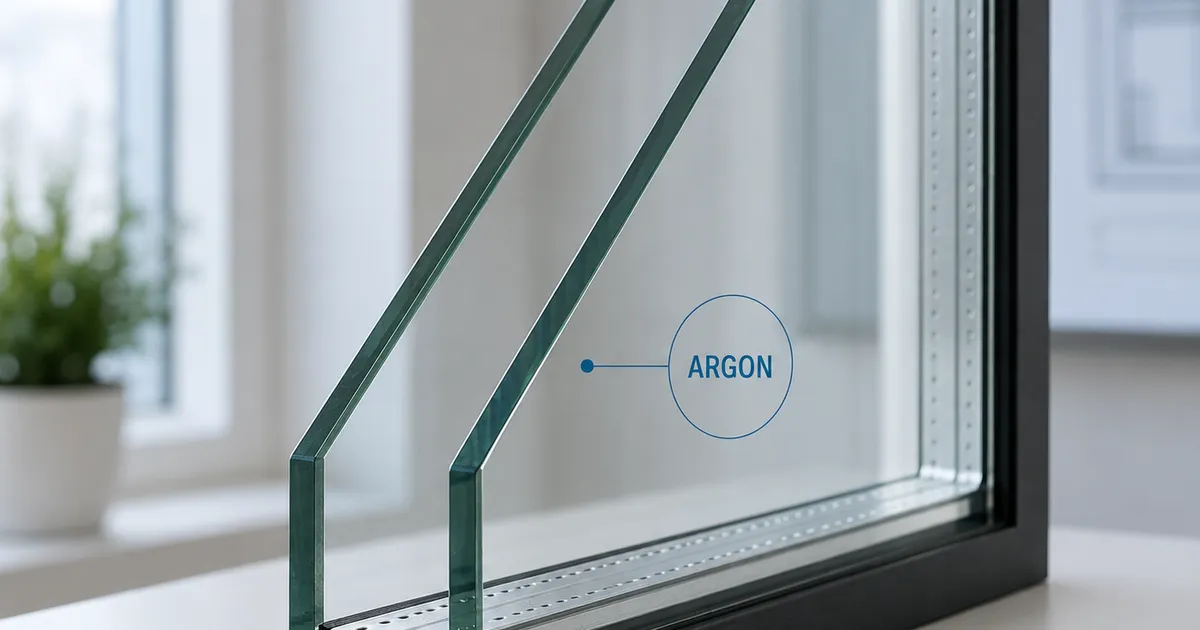
- Argon filling — improves thermal insulation by 10-15%
- Krypton filling — improves thermal insulation by 20-25% (expensive)
- Vacuum glass units — maximum thermal insulation (exotic solution)
Sound Insulation and Noise Reduction
Sound insulation is an important parameter for city apartments and houses near roads.
Factors affecting sound insulation:
- Glass thickness — greater thickness = better sound insulation
- Number of chambers — more chambers = better sound insulation
- Different glass thicknesses — reduces resonance
- Wider chamber — improves sound insulation
Glass unit types for sound insulation:
Sound-insulating glass unit:
- Glass of different thicknesses (e.g., 6 mm + 4 mm)
- Wider chamber (16-20 mm)
- May have laminated glass
- Noise reduction: 35-40 dB
Acoustic glass unit:
- Special construction for maximum noise reduction
- Laminated glass with interlayer
- Noise reduction: 40-45 dB
- Used near airports and railways
Fact: A standard double-chamber glass unit reduces noise by 25-30 dB, which can transform a noisy street into a quiet room.
What to Look For When Choosing
Choosing the right glass unit requires attention to several key parameters:
1. Glass type and thickness:
- Standard glass: 4 mm
- Reinforced glass: 6-8 mm
- Tempered glass: 4-10 mm (for safety)
- Laminated glass: 4-6 mm (for sound insulation)
2. Chamber width:
- Minimum: 12 mm (for standard glass units)
- Optimal: 16 mm (for improved insulation)
- Maximum: 20 mm (for acoustic glass units)
3. Gas filling:
- Air — standard solution
- Argon — improved thermal insulation (+10-15%)
- Krypton — maximum insulation (+20-25%)
4. Additional options:
- Energy-saving coating — essential for heated spaces
- Solar control coating — for rooms with high sun exposure
- Sound-insulating coating — for noisy Kyiv neighborhoods
5. Quality certificates:
- Check for conformity certificates
- Ask for manufacturer warranty
- Verify the manufacturer’s reputation
Important: Don’t skimp on the glass unit — a quality product will last longer and provide better comfort than a cheap alternative, especially during Kyiv’s winters.
Comparison and Recommendations
To make selection easier, here are our recommendations for different situations:
For a typical Kyiv apartment:
- Double-chamber glass unit with soft or hard coating
- Argon filling
- Glass thickness: 4 mm
- Chamber width: 16 mm
For a noisy neighborhood:
- Double-chamber acoustic glass unit
- Laminated glass or different thickness panes
- Chamber width: 16-20 mm
- Argon filling
For a private house:
- Triple-chamber glass unit with hard coating
- Maximum thermal insulation
- Argon or krypton filling
- Glass thickness: 6 mm
For cold regions:
- Triple-chamber glass unit with dual energy-saving coating
- Maximum chamber width
- Krypton filling
- Additional window opening insulation
Comparison table:
| Parameter | Basic | Improved | Premium |
|---|---|---|---|
| Chambers | 2 | 2-3 | 3 |
| Coating | None | Soft (ITO) | Hard (K) |
| Filling | Air | Argon | Krypton |
| Thermal Conductivity | 1.4 | 1.1 | 0.8 |
| Price | Lowest | Medium | Highest |
Conclusion
Choosing a quality glass unit is an investment in your comfort and heating savings:
- Identify your needs — thermal insulation, sound insulation, or both
- Choose the type — double-chamber or triple-chamber
- Add technologies — energy-saving coating and gas filling
- Verify quality — certificates and warranties
UWS performs glass unit replacement and window installation in Kyiv — contact us for a free consultation and quality installation.